Introduction
Power steering fluid is more stable than brake fluid and has a longer life. Typically, fluid
replacement is performed only when the power steering system is repaired or in the event of
a serious problem such as contamination of the fluid by metal particles, etc.
Power Steering Fluid Inspection
Park the vehicle on a level surface and stop the engine. Then, open the hood and observe
the fluid level in the power steering fluid reservoir.
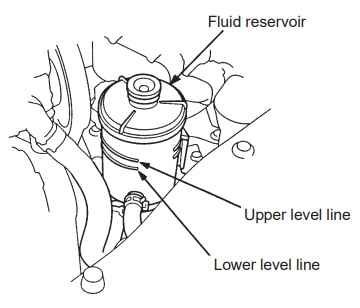
The fluid level should be between the upper and lower lines.
CAUTION:
- Use only Genuine Honda Power Steering Fluid. Other types of fluid may damage the power steering system.
- Do not fill the reservoir beyond the upper level line. If the fluid level is excessively high, fluid may verflow from the reservoir during vehicle operation. (The fluid increases greatly in volume when it becomes hot.)
- Pour the fluid slowly and carefully to avoid making air bubbles. Any air bubbles in the system would prevent the fluid from transmitting power effectively. Also, air bubbles in the system would make the fluid level in the reservoir look artificially high, preventing the correct amount of fluid from being added. Use a suitable jug to avoid spilling fluid on the vehicle’s body. Wipe off spilled fluid immediately.
- After adding fluid, fit the reservoir cap securely.
NOTE:
If the fluid level is extremely low, fluid may be leaking from the system. Inspect the system
carefully.
If the fluid level is low, add fluid until it reaches the upper level line. When checking the fluid
level, check also the condition of the fluid. Replace the fluid if it is severely contaminated.
Power Steering Fluid Replacement
NOTE:
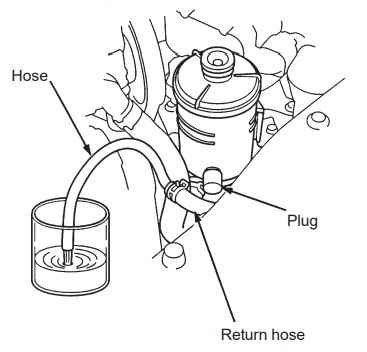
Before removing the reservoir, it is advisable to remove the fluid from the reservoir using a
syringe.
Refer to the shop manual for details of the power steering fluid replacement procedure.
Post Comment