Inspection of Damper Operation
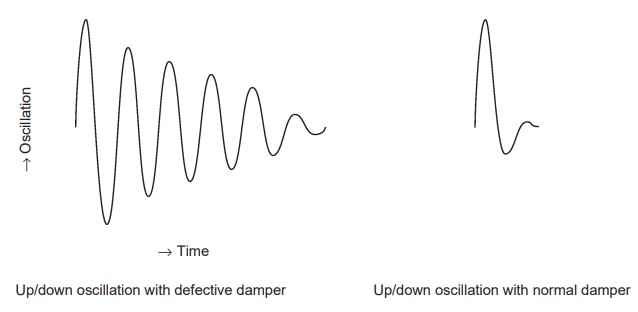
In the procedure described in this module, the technician bounces the vehicle and observes
the manner in which the vehicle’s up/down oscillation diminishes. It is not possible to
recognize abnormal damper operation without being familiar with normal damper operation.
Before checking a vehicle’s damper operation, therefore, you should bounce a new vehicle
of the same model and observe its damper operation.
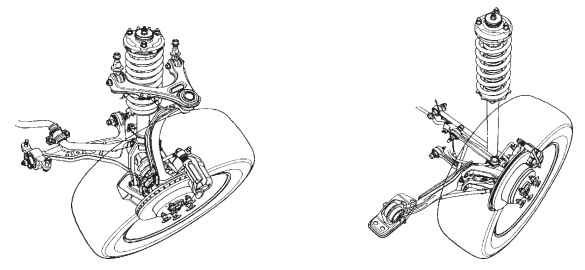
The damper inspection procedure shown in shop manual, which is performed with the dampers
removed from the vehicle, is used by repair technicians during repair operations. The
simpler inspection procedure described in this module is intended for maintenance
technicians.
NOTE:
Damper operating characteristics vary from one vehicle model to another. When comparing
the operation of one vehicle’s dampers with that of another vehicle’s dampers, make sure
the reference vehicle is a similar or identical model.
Inspection Procedures
- Park the vehicle on a flat, level surface and apply the parking brake.
- Place both hands on the vehicle body above one of the wheels, then push downward
firmly and rapidly such that the body bounces on the springs. Be careful not to deform or
otherwise damage the body panels when pushing them downward.
NOTE:
With a vehicle that has a tailgate, the body area directly above each rear wheel may be
difficult to reach. Open the tailgate and press downward on the tailgate opening at the
nearest possible point to the rear wheel. - Take a rough measurement of the time taken for the vehicle’s up/down oscillation to stop.
- Repeat this procedure at each corner of the vehicle.
NOTE:
This inspection method gives only a rough indication of the dampers’ operation. Inform the
service manager if you suspect that the dampers are abnormal.
Inspection of Suspension System Parts
- Lift the vehicle and remove its wheels.
- Visually inspect the following:
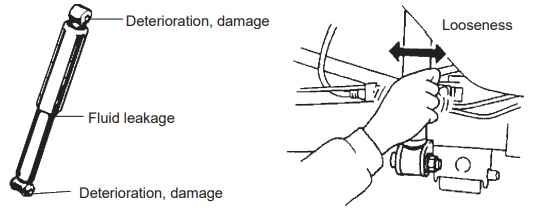
• Dampers for fluid leakage
• Links, arms, and related items for deformation and damage
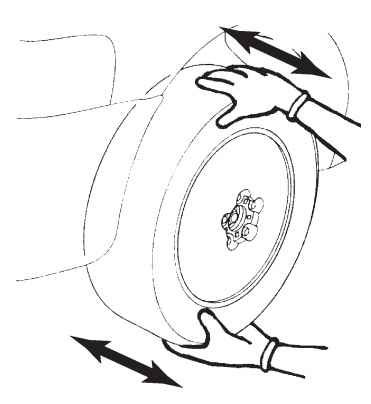
• Rubber bushings for deterioration and damage - Check suspension components for looseness by grasping them and attempting to shake them.
- Using a torque wrench, check the tightening torques of fasteners and rectify any looseness.
NOTE:
The shapes and other features of suspension components vary significantly from one
vehicle model to another. Refer to the relevant shop manual for details of areas that require
inspection and of the tightening torque specifications.
Precautions
- The dampers are telescopic, and fluid leakage typically occurs at the clearances between their inner and outer tubes. Leaking fluid tends to be blackened by dirt.
- Check the links, arms, and related items for deformation by running your hands along
them and by visually comparing the corresponding parts on the left- and right-hand sides of the vehicle. - The links and arms are unlikely to be deformed unless they have been subjected to severe shock. If the links and/or arms are deformed, therefore, nearby components are
also likely to be affected. It is therefore important to inspect all nearby items including the body. Do not limit the inspection to the suspension system. - Check for play in rubber bushings by feeling the bushings and by attempting to shake related components.
Post Comment